
Posted on 01/17/2006 6:57:49 AM PST by pabianice
WARPLANES: Pilots Surrender to UAVs
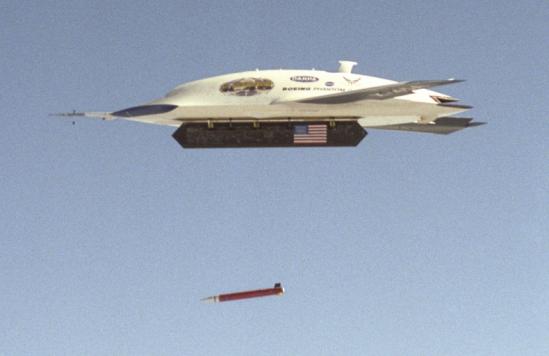
January 17, 2006: The U.S. Department of Defense has decided to make the next generation heavy bomber an unmanned aircraft. The Department of Defense also wants the new aircraft in service by the end of the next decade, some twenty years ahead of schedule. At the same time, the current combat UAV program (J-UCAS, run by the air force and navy) is to be changed as well. The current X45 project will be split up, with the air force and navy allowed to develop a shorter range combat aircraft to suit their particular needs. These will be bombers, with some air-to-air capabilities. The X45 was meant mainly for those really dangerous bombing missions, early on, when enemy air defenses have to be destroyed. But the Pentagon finally got hip to the fact that the J-UCAS developers were coming up with an aircraft that could replace all current fighter-bombers. This was partly because of the success of the X45 in reaching its development goals, and the real-world success of the Predator (in finding, and attacking, targets) and Global Hawk (in finding stuff after flying half way around the world by itself.)
The X45 program started out, two years ago, as a DARPA research project. But last Fall, it was taken from DARPA and given to the air force, with orders to move as quickly as possible. At that time, the plan was to build the X45C version and get it through all the tests needed to certify it for combat. At the time, it was thought another four years would be needed to do that. Now, no one is sure it will take that long.
The X45A has passed tests with formation flying, and dropping a JDAM (actually the new 250 pound SDB version). The X45C will carry eight SDB (250 pound small diameter bombs), or up to 4500 pounds of other JDAMs. The X45A has already shown it can fly in formation and refuel in the air. The X45C will weigh in at about 19 tons, have a 2.2 ton payload and be 39 feet long (with a 49 foot wingspan.) The X-45A, built for development only, is 27 feet long, has a wingspan of 34 feet and has a payload of 1.2 tons. The X-45C will be able to hit targets 2,300 kilometers away and be used for bombing and reconnaissance missions. Each X-45C will probably cost about $30 million, depending on how extensive, and expensive, its electronic equipment will be.
The one topic no one wants to touch at the moment is air-to-air. This appears to be the last job left for pilots of combat aircraft. The geeks believe they have this one licked, and are giving the pilot generals the, "bring it on" look. The generals are not keen to test their manned aircraft against a UAV, but this will change the minute another country, like China or Russia, demonstrates that they are seriously moving in that direction.
Dale Brown would be proud...
To really screw things up, let a computer do it.
Bad idea, really bad idea.
ping
However, there are serious concerns about UCAV's--notably the potential for someone to sabotage the mission by re-programming the UCAV in flight. Small wonder why there is still a need for manned aircraft.
hmm...
Bump... got any pictures? Should I be glad that I didn't make it into the Marine Corps Aviation program two years ago?
A person is still flying it, FWIW.
The one topic no one wants to touch at the moment is air-to-air.
-----
Never happen in reality. Not for close air combat / dogfight...the trained human mind is too versatile and variable.


What is the ideal cockpit crew?A pilot and a dog. The pilot is there to feed the dog, and
the dog is there to bite the pilot in case he tries to touch
anything.
"with the air force and navy allowed to develop a shorter range combat aircraft to suit their particular needs"
How do you land one of these things on a carrier?
I love the idea of unmanned aircraft taking out air defences. I doubt we would be letting a computer take the decisions on when to drop weapons. I imagine a predator-style system with aircrews using telepresence. Ideally, it should be just like being in the cockpit, except you're sitting on the ground thousands of miles away.
But i agree with you - computers taking combat decisions would be bad ;) Think we're a long way from that though.
Computer.
In many ways fighter aircraft performance is limited by the g loads a human pilot can sustain. UAV can perform turns up to the airframe limits. In addition, by removing humans the aircraft will be smaller and stealthier.
It’s a great idea; the sooner the better.
These are unmanned, not autonomous. The pilot is back in the States with a coke and a bag of doritos in the "cockpit". You can also go to much larger crews if you don't have to put them on the plane. That way you can have a pilot, electronic combat officer, bombadier, mission commander, etc. as separate people instead of just one person trying to handle all of that.
Unmanned fighter planes will soon go away because one of the major design limitations is the pilot. Imagine a F-22 cabable of super cruise and 15-G turns which no pilot could survive. The USAF sees air-to-air combat as its forte and will probably not give it up until they run into an enemy working on something which will trounce them. Even then, I think the first version will be something more like a cruise missle with some air-to-air munitions and jamming on it to go in on the first wave of an attack.
money saved by not using pilots,
could be spent on the USMC
Disclaimer: Opinions posted on Free Republic are those of the individual posters and do not necessarily represent the opinion of Free Republic or its management. All materials posted herein are protected by copyright law and the exemption for fair use of copyrighted works.