Posted on 11/19/2009 7:09:15 PM PST by rabscuttle385
Former Federal Reserve chairman Alan Greenspan and Paul Volcker wrote the House Financial Services Committee earliy this month that they opposed a provision, backed by Rep. Ron Paul (R., Texas) that would expand the congressional Government Accountability Offices audits of the Fed. The committee, ignoring the pleas from the two, endorsed the provision Thursday.
Greenspan and Volcker, in a letter sent to the committees chairman and ranking Republicans, warned that the provision threatened the ability of the Fed to foster price stability independent of political interference.
(Excerpt) Read more at blogs.wsj.com ...
The Fed is corrupt. Audit its books, and then rip up its charter.
Afterwards, we can move on to a cleansing of the Federal government, as well as multiple assorted States.
Yeah, last I checked, if the IRS audits me, that threatens my price stability too.
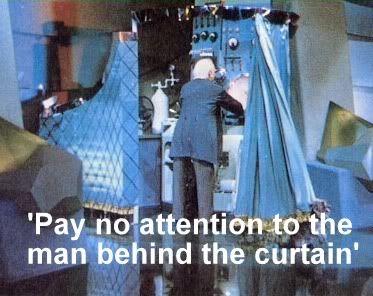
Pay no attention to the printing press behind the curtain.
Surprised this actually made it through the committee. Good news for a change.
More threats from unelected scumbags protecting the fed.
hahahaha
Very, very funny....
Sounds like a great plan to me! Too bad most of the so-called "conservative" politicians in DC wouldn't see it that way. They are all bought, and paid for by the REAL "special interests" that even fake 'reformers' like McCain won't even speak of. Entrenched power is what we have in place with the Federal Reserve. They, and others like them, won't hold on to that power forever though. Eventually it's going to get pretty bad for our average citizens, and these #@*#ers will be decorating lamp posts along the beltway when it's all said and done. Eventually they are going to run out of people to bend over for tax revenues, and it will be a downward spiral from there. I think that process is well underway. The breaking point will come when countries wise up and stop purchasing our soon to be worthless treasury bonds, and the government tries to compensate for the lost revenue with massive tax increases on those that are still employed.
Hahahahahahah....God! That was funny. Thanks!
Those who vote Nay are enemies of the people. May include many GOP in there too, I haven’t checked
AL-06 Rep. Spencer Bachus yay
CA-12 Rep. Jackie Speier yay
CA-22 Rep. Kevin McCarthy yay
CA-27 Rep. Brad Sherman yay
CA-35 Rep. Maxine Waters nay
CA-40 Rep. Edward R. Royce yay
CA-42 Rep. Gary G. Miller nay
CA-43 Rep. Joe Baca nay
CA-48 Rep. John Campbell yay
CO-07 Rep. Ed Perlmutter yay
CT-04 Rep. Jim Himes nay
DE-01 Rep. Michael N. Castle yay
FL-08 Rep. Alan Grayson yay
FL-12 Rep. Adam Putnam yay
FL-15 Rep. Bill Posey yay
FL-22 Rep. Ron Klein nay
FL-24 Rep. Suzanne Kosmas
GA-06 Rep. Tom Price yay
GA-13 Rep. David Scott yay
ID-01 Rep. Walt Minnick yay
IL-04 Rep. Luis V. Gutierrez nay
IL-08 Rep. Melissa L. Bean nay
IL-13 Rep. Judy Biggert yay
IL-14 Rep. Bill Foster nay
IL-16 Rep. Donald A. Manzullo yay
IN-02 Rep. Joe Donnelly nay
IN-07 Rep. Andre Carson nay
KS-02 Rep. Lynn Jenkins yay
KS-03 Rep. Dennis Moore nay
MA-04 Rep. Barney Frank nay
MA-08 Rep. Michael E. Capuano nay
MA-09 Rep. Stephen F. Lynch nay
MI-09 Rep. Gary Peters yay
MI-11 Rep. Thaddeus McCotter yay
MN-03 Rep. Erik Paulsen yay
MN-05 Rep. Keith Ellison nay
MN-06 Rep. Michele Bachmann yay
MO-01 Rep. William Lacy Clay yay
MO-05 Rep. Emanuel Cleaver nay
MS-01 Rep. Travis Childers yay
NC-03 Rep. Walter B. Jones yay
NC-10 Rep. Patrick T. McHenry yay
NC-12 Rep. Melvin L. Watt nay
NC-13 Rep. Brad Miller nay
NH-02 Rep. Paul W. Hodes yay
NJ-03 Rep. John Adler yay
NJ-05 Rep. Scott Garrett yay
NJ-07 Rep. Leonard Lance yay
NY-03 Rep. Peter King yay
NY-04 Rep. Carolyn McCarthy yay
NY-05 Rep. Gary L. Ackerman nay
NY-06 Rep. Gregory W. Meeks nay
NY-12 Rep. Nydia M. Velázquez yay
NY-14 Rep. Carolyn B. Maloney nay
NY-25 Rep. Dan Maffei yay
NY-26 Rep. Christopher Lee yay
OH-01 Rep. Steve Driehaus yay
OH-06 Rep. Charles Wilson nay
OH-15 Rep. Mary Jo Kilroy nay
OK-03 Rep. Frank D. Lucas yay
PA-06 Rep. Jim Gerlach yay
PA-11 Rep. Paul E. Kanjorski
SC-03 Rep. J. Gresham Barrett yay
TX-05 Rep. Jeb Hensarling yay
TX-09 Rep. Al Green nay
TX-14 Rep. Ron Paul yay
TX-15 Rep. Rubén Hinojosa yay
TX-19 Rep. Randy Neugebauer yay
TX-24 Rep. Kenny Marchant yay
WI-04 Rep. Gwen Moore nay
WV-02 Rep. Shelley Moore Capito nay
An audit it good, but what really needs to happen is a leveling with the America people as to what the Federal Reserve really is (a private bank), who owns it (large commercial banks), and what its primary functions are (monetizing government debt, creating money from thin air, holding the American people in perpetual debt-slavery).
Can someone explain to me how this audit can affect price stability? I can just hear a major company claiming tactic to the IRS?
Right, then we can go back to letting banks print their own currency once again. And JP Morgan can fill the void left by the Fed’s demise, just as it was doing before 1913.
Milton Freedman proved the Fed Reserve caused the Great Depression. We allow them to continue and they will cause the end of the Nation as we know it.
Another hurdle will be on the 1st of Dec. Expect an all out assult on Paul and the audit.
The Private Fed has hired some big PR firms to take their case to the people and scare the living crap out of them.
Another good unaccountable-financial-oligarch/bad unaccountable-financial-oligarch routine?
Eliminate the FED.
Audit endangers them.
They’re scared now.
They’ll be in prison later.
AUDIT THE FED.
i smell thieves and liars
“Milton Freedman proved the Fed Reserve caused the Great Depression”
That’s not exactly what Friedman and Schwartz wrote. What they said is that the Fed’s failure to act as banks failed and the money supply imploded allowed the Depression to become a major disaster. In their view the Fed wasn’t the cause, but it did fail to recognize what was happening to the banking system and hesitated to respond in force once it did.
It is definently threatening to the international banksters. Why did we ever let them go without overseeing their actions with outside audits?
“What about a debt-free, government-issued, fiat currency like Lincoln’s Greenbacks? “
The fiat Greenback issue set off an inflation that lasted for years. Gold convertibility was suspended in 1861 and didn’t resume until 1879.
“According the the US Constitution, Congress has the right to issue our money, and cannot delegate it to someone else”
The Constitution authorizes Congress to coin money, not to print it. Moreover in Section 10 it prohibits States from making anything other than gold and silver a legal tender. There was a distinct antipathy to government paper money due to the recent experience of the Continental Dollar.
During the 1800s and up until 1913 banks printed their own currency. You could have a wallet full of dollars each printed by a different bank, and not all of them traded at par value. It was like dealing with foreign currency. The Federal Reserve Act provided for a uniform currency, something we take for granted today.
“We have been conned into borrowing our own money, thus incurring an unpayable debt and tax burden.”
We don’t “borrow” our money. There is absolutely no interest paid on the money we use, and in fact there is no way to implement something like that even if you wanted to do so. The only debt we owe is what Congress obligates us to pay, and we pay that debt to the Treasury via our taxes. There are a lot of hare-brained ideas floated about the Fed, but the one that amazes me the most is the idea that we pay interest on our money. I’ve yet to see anyone billed for the use of their money. But every April 15th I do get billed by the IRS for the money that Congress spends in my name. That debt does really exist.
Agreed. If ANYONE votes against the audit, then that is evidence that they have been paid off by the Federal Reserve.
My only question is if this audit will audit everything, or will the Federal Reserve tweak the bill enough to keep the dirty laundry private?
Ping
I’m no Ron Paul or Alex Jones fan but I detest the Federal Reserve. Corrupt is an understatement.
As long as my bank backs its currency with specie, I DON’T CARE. Remember, the States are not to make anything but gold or silver into tender for debts, per Article I, Section 9.
The Fed is the NWO’s number one tool.
What anywhere in economic theory suggests that prices become more unstable as the market has access to better information? The only thing that becomes unstable is the ability to manipulate a price to a level that a free market [one where everyone has identical information] would not support.
You're obligated to pay that interest because Congress borrowed money, not because the Fed is charging you for the $20s in your wallet.
Would you make the same claim if the Fed bought GE bonds instead of Treasury bonds?
“War is inflationary, and the Greenback did loose value, but at the end of the Civil War the Greenback was still worth 68 cents to a gold dollar, not bad, considering Lincoln saved the taxpayers almost $4 billion in interest by cutting out the moneylenders.”
The war was incidental to the inflationary impact of all of those greenbacks. If the greenback issue had been done in peacetime it would have been just as inflationary. The process is described in von Mises’ Theory of Money and Credit. It takes years for an economy to absorb and adjust to a huge influx of credit.
As for it being good to the taxpayers, that is entirely an illusion. Inflation is a hidden tax that takes its bite from everyone through a diminished buying power of the dollar. I take it that you weren’t of working age during the ‘70s or you’d be a good deal more critical of the insidious nature of inflation.
“I am sure you know this, but the Federal Reserve adds money to the system by buying government bonds, which pay interest. The money it buys the bonds with is brand new, and is sometimes paid out in Federal Reserve notes.”
“and is sometimes paid out in Federal Reserve notes.” I’m not sure what you mean here. FRNs have been the sole currency since the end of Silver Certificates and US Notes. In any case currency is a tiny fraction of the liquid money supply, the majority being ledger entries.
What the Fed is doing is adjusting the amount of liquidity in the banking system. Buying bonds provides high-powered money to the banks, providing reserves to be lent. Selling bonds acts as a sponge, removing high-powered money by converting it to illiquid bonds.
“Since the Federal Reserve now owns the bonds, we are obligated to pay interest to them.”
Which isn’t entirely accurate because you omit a major difference between the Fed and every other bondholder: the Fed only gets to keep enough interest to pay the salaries of its staff and their normal expenses. All interest above and beyond basic expenses goes right back to the Treasury. Anyone else gets to keep all of the interest earned on all of the bonds that they hold. But not the Fed.
“The government makes interest payments using tax money, therefore we pay interest on the money created by the Federal Reserve, which it created on an electronic ledger with a few keystrokes.”
Now this is an interesting statement, because at first glance it appears to have the normal three-part structure of a syllogism; major premise, minor premise, and conclusion. But in fact the minor premise is missing entirely, and we go from the major premise:
“The government makes interest payments using tax money”
right to a conclusion:
“therefore we pay interest on the money created by the Federal Reserve”
with a descriptive, but irrelevant, clause appended to the end:
“which it created on an electronic ledger with a few keystrokes.”
It’s not a syllogism, and it’s not logic. If you wish to try to prove your conclusion
“therefore we pay interest on the money created by the Federal Reserve”
you’re going to have to structure your argument logically.
But of course we don’t pay interest on any money whether created by the Fed or not, we pay interest on debt issued by the Treasury at the behest of Congress. But don’t let me dissuade you from trying to prove otherwise, the exercise may prove stimulating.
“As long as my bank backs its currency with specie, I DONT CARE. Remember, the States are not to make anything but gold or silver into tender for debts, per Article I, Section 9.”
Well I previously cited the prohibition on States so I suspect I still remember it.
But banks aren’t States, and they issued their own currency. They didn’t limit their currency issue to just the amount of specie on hand. Under the National Bank Act of 1863 banks had to use Treasury debt as the reserve backing their currency issue.
“Inflation wouldn’t be a problem with Greenbacks if fractional reserve lending were prohibited. “
Of course it would. The greenback issue flooded the northern economy with new money cutting the value of the dollar to 38 cents at its low. You can’t double the quantity of money overnight and not suffer from a major inflation.
You’ve managed to reinvent England’s Peel Act, but turn it on its head. Unbacked deposits act the same as unbacked notes. Under the Peel Act, fiduciary media that was suppressed as currency developed instead as demand deposits. Your idea would suppress fiduciary deposits and substitute currency. The same tune, just played backwards. Google Mises’ Theory of Money and Credit and start reading around page 370.
“Those theories are fine for debt-money, but do not apply to a debt-free, government-issued, fiat Greenback. Money wouldn’t be created as loans, and wouldn’t be destroyed by paying back principal. It would circulate permanently, and could be issued in lieu of taxes at a steady rate to keep up with population growth. “
That’s heady stuff. It sounds remarkably like the John Law/ Weimar/ Zimbabwe school of money. Debt-free, government-issued, you just print your way to happiness. When the euphoria wears off we’ll need a dose of Friedman’s monetarism with an Austrian school chaser.
“For every $1 created, $1 + interest must be paid back. The fact that there is always more money owed than money in existence means that new loans must be taken out. This is highly inflationary. “
No, it simply means that you haven’t learned the difference between a flow of money versus the quantity of money. Interest is paid as a flow over time, not in one lump sum requiring an increased quantity of money in the whole economy. Aristotle’s sterility of money theory was dispensed with about 400 years ago, it’s time to get up to speed.
“True, but this actually proves my original point: Buying government bonds is the mechanism the Fed uses to start the money creation process. Interest must be paid on those bonds. The fact that we get the interest (mostly) rebated doesn’t negate the fact that it was paid out. “
No, it doesn’t prove your point, it negates your argument by illustrating that the amount of interest kept by the Fed is microscopic. Taxpayers could only suffer from “debt-money” if the Fed retained the interest that it receives on its bond holdings. It doesn’t. Other than the tiny portion that goes to salaries the interest it receives returns directly to the Treasury, which diminishes the amount of money that Treasury must take in in taxes. The Fed receives the same amount of money whether it holds one bond, or the entire national debt.
“That really is a meaningless distinction. Money is debt, and debt is money. Let me restate, hopefully clearer this time: All money is created from loans. Interest must be paid on those loans. We cannot create $1 without a $1 debt obligation plus interest.”
Treasury bonds are debt. Money isn’t. If the national debt were paid off tomorrow then Treasury bonds would disappear, but money would be still be with us.
Well, it would be here for most of us, but for those believing in debt-money who knows? For them debt equals dollars; a sudden case of no debt would equal no dollars. Bummer.
You should read what he wrote, said in interviews and speeches in his days at UofC.
Even the Fed aknowleged the fact.
Making loans from deposits is fractional reserve lending.
The fact that there is always more money owed than money in existence means
There is also more money owned. So what?
Buying government bonds is the mechanism the Fed uses to start the money creation process. Interest must be paid on those bonds.
They could buy commodities instead. Would that make you happy?
“You should read what he wrote”
I’ve read his A Monetary History of the United States and have it here for reference. If you think he supports your position then name the page.
No, it is not. Creating new money and lending it based on deposits is fractional reserve lending - at least in modern banking.
What is the difference between "if a bank wants to lend $900, it must actually take $900 from its deposits and lend it" and "Creating new money and lending it based on deposits"? Spell it out.
They could buy commodities instead. Would that make you happy?
No, the entire concept of private central banking needs done away with
But money would be created without interest. I thought that was the problem?
How is the $20 in your wallet debt? Who are you paying interest? How much do you pay? Where do you send your check?
“Not so fast. The examples you cite are examples of private central banks. The 1930’s Wiemar inflation, for example, was the result of Germany’s private central bank and other commercial banks lending massive amounts of new money into existence. “
Weimar inherited the Reichsbank which had presided over a stable currency from its inception in 1876 until WWI. The Mark had been convertible into gold. Weimar suspended gold convertibility and issued a strictly paper mark. With no gold link to act as a brake it simply printed all the currency that it needed to accommodate the unworkable reparations payments. The German hyperinflation was the result of the Weimar government substituting political convenience for sound monetary policy, it wasn’t due to the existence of the Reichsbank.
America suffered a hyperinflation during the Continental dollar episode and a near 50% inflation from the Greenback issuance. In both instances the government acted as the monetary authority, there was no American central bank either public or private.
The presence of a private central bank does not cause inflation, nor does the absence of one mean that there will not be hyperinflation. The Bank of England has been in operation since 1698 and England has yet to experience a hyperinflation.
The Fed was authorized in 1913. The dollar was stable from 1913 to 1933, at $20 per oz. In 1933 FDR, not FED, devalued the dollar to $35 per oz. The dollar remained on a $35 per oz standard until 1971 when President Nixon closed the gold window allowing the dollar to float. The inflation of the 70’s followed. Again it was an America President, not the Fed, that devalued the dollar.
“why delegate money creation to the Federal Reserve in the first place? They are just creating it with a computer or printing press. What makes that OK if done by a central bank but not the government? “
The answer is above. Politicians have an incentive to debase money when they act as the monetary authority. Central banks don’t. Politicians aren’t willing to endure the recessions that monetary discipline demands, so they will break links to gold that limit easy money. An independent central bank doesn’t have to think in terms of the next election. The trick is to keep them insulated from political pressure.
“All money is indeed debt, and all debt is indeed money. Treasury bonds are assets of the Federal Reserve and the currency or bank deposits they print or create to pay for the bonds are liabilities.”
Lincoln’s administration passed the National Bank Act creating a national banking system. National banks were able to print and issue their own currency. In order to do so they were required to hold Treasury debt as the reserve base against their own money creation. How exactly is this different from the Fed monetizing Treasury debt to create high-powered money?
Disclaimer: Opinions posted on Free Republic are those of the individual posters and do not necessarily represent the opinion of Free Republic or its management. All materials posted herein are protected by copyright law and the exemption for fair use of copyrighted works.