
Posted on 01/16/2010 3:08:41 PM PST by BigReb555
Tuesday, January 19, 2010, is the 203rd birthday of Robert E. Lee, whose memory is still dear in the hearts of many Americans and people throughout Gods good earth.
(Excerpt) Read more at canadafreepress.com ...
Did you know that Paul Revere, Betsy Ross, Martin Luther King and Robert E. Lee were born during the month of January?
History can be great fun when parents and grandparents share stories about the past with their children making the study of American history a Family Affair.
Tuesday, January 19, 2010, is the 203rd birthday of Robert E. Lee, whose memory is still dear in the hearts of many Americans and people throughout Gods good earth. During Robert E. Lees 100th birthday in 1907, Charles Francis Adams, Jr., a former Union Army Commander and grandson of United States President John Quincy Adams, spoke in tribute to Robert E. Lee at Washington and Lee Colleges Lee Chapel in Lexington, Virginia. His speech was printed in both Northern and Southern newspapers and is said to had lifted Lee to a renewed respect among the American people.
Robert E. Lee-Stonewall Jackson Day events are planned for Saturday, January 16, 2010, in Lexington, Virginia that includes a Memorial at Lee Chapel featuring Guest Speaker Pastor John Weaver, Past Chaplain in Chief of the Sons of Confederate Veterans. For additional information go to: http://leejacksonday.webs.com/ Many events are planned for Lees birthday that includes:
The United Daughters of the Confederacys annual Robert E. Lee birthday commemoration held in front of Lees statue which is in the Crypt area of the United States Capitol in Washington, D.C. on Saturday, January 16, 2010 at 11:00 a.m. See upcoming events at: http://www.leecamp.org/ and
The Sons of Confederate Veterans 23rd Annual Robert E. Lee birthday celebration in Milledgeville, Ga. on Saturday, January 23, 2010, beginning with a 10:45 a.m. march from the old governors mansion to the one time capitol building of Georgia. See details at: http://www.georgiascv.com/
Do you remember when
On August 5, 1975, 110 years after Gen. Lee's application, President Gerald Ford signed Joint Resolution 23, restoring the long overdue full rights of citizenship to Gen. Robert E. Lee. Read more at: http://www.ford.utexas.edu/library/speeches/750473.htm Who was Robert E. Lee?
Robert E. Lee was born on Monday Jan. 19, 1807, at Stratford in Westmoreland County, Virginia. The winter was cold and the fireplaces were little help for Roberts mother, Ann Hill (Carter) Lee.
Ann Lee named her son Robert Edward after two of her brothers.
Robert E. Lee undoubtedly acquired his love of country from those who lived during the American Revolution. His Father, Light Horse Harry was a Revolutionary War Hero, served three terms as Governor of Virginia and was elected to the United States House of Representatives. Two members of his family also signed the Declaration of Independence.
Lee was educated at the schools of Alexandria, Va., and he received an appointment to the United States Military Academy at West Point in 1825. He graduated in 1829, second in his class and without a single demerit.
Robert E. Lees first assignment was to Cockspur Island, Georgia, to supervise the construction of Fort Pulaski.
While serving as 2nd Lieutenant of Engineers at Fort Monroe, Virginia. Lee wed Mary Ann Randolph Custis. Mary was the daughter of George Washington Parke Custis, the Grandson of Martha Washington and adopted son of George Washington.
Mary was an only child; therefore, she inherited Arlington House, across the Potomac River from Washington, D.C., where she and Robert E. Lee raised seven children.
In 1836, Lee was appointed to first Lieutenant. In 1838, with the rank of Captain, Robert E. Lee fought in the War with Mexico and was wounded at the Battle of Chapultepec.
Lee was appointed Superintendent of the United States Military Academy in 1852.
General Winfield Scott offered Robert E. Lee command of the Union Army in 1861, but he refused. He said, I cannot raise my hand against my birthplace, my home, my children.
Lee served as adviser to President Jefferson Davis, and then on June 1, 1862, commanded the legendary Army of Northern Virginia.
After four terrible years of death and destruction, Gen. Robert E. Lee met Gen. Ulysses S. Grant at Appomattox Courthouse in Virginia and ended their battles.
Lee was called Marse Robert, Uncle Robert and Marble Man.
In October 1865, Lee was offered and accepted the presidency of troubled Washington College in Lexington, Virginia. The school was later renamed Washington and Lee College in his honor.
Robert E. Lee died of a heart attack at 9:30 AM on the morning of October 12, 1870, at the college and is buried at Lee Chapel with his family and near his favorite horse, Traveller.
Booker T. Washington, Americas great Black-American Educator wrote in 1910, The first white people in America, certainly the first in the South to exhibit their interest in the reaching of the Negro and saving his soul through the medium of the Sunday-school were Robert E. Lee and Stonewall Jackson.
Lets not forget those who made our nation great!
God Bless this man for having the faith in his convictions to support his Army at a time of great contention in America. My birthday is on the 21st, so anyone in proximity to me shares a bond of sorts. In a day and time when our very Constitution is under attack by socialists, Marxists, and Communists, we could use a few more Robert E. Lees in this world.
It’s deliciously ironic that the Canada Free Press published this article. Our very own media is so enmeshed in the Communism pushed by our government that they can’t report on true historical significance anymore.
FReepers, please pray for our Republic. It is lost and wandering in a limitless desert. Pray that the the good Lord shows us the way out of this.
God rest you Marse Robert. You will always live in the hearts of those who value honor and courage, and love of one’s homeland. You were noble, all of your life.

Dixie Ping!!!


THE WASHINGTON & LEE SWING
When Washington and Lee’s men fall in line,
They’re bound to win again another time.
For W-L I yell, I yell, I yell.
And for the university I yell, I yell like hell,
So fight, fight, fight, fight, fight for every yard.
Circle the ends and hit the line right hard
And roll the ememy upon the sod, yes, by God,
RAH! RAH! RAH!
Lee’s greatness as a man far exceeds his greatness as a general: not an easy accomplishment.
God speed General
Thanks for posting this.
I am proud to say we just returned from a SC SCV banquet this afternoon honoring Lee and Jackson where our very own FReeper was guest speaker. She received a standing ovation.
Congratulations to freeper carton253 on continued success of her book and speaking tour.
http://chancellorsvillechronicles.blogspot.com/
Lee was mentioned in the fourth paragraph of Governor McDonnell’s inauguration speech today:
“It was here that Robert E. Lee, the son of a Virginia Governor, was commissioned as Commander of the Commonwealth’s military forces as a young nation split into war.”
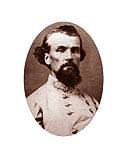
You share a birthday with Gen. Stonewall Jackson!!! Virginians still celebrate Lee-Jackson day...
There is a beautiful picture of General Lee astride Traveler in the library at LSU/Baton Rouge when I went to undergraduate school there in 1957. I hope that the ignorant PC crowd has not had it removed it.
Don’t forget that two days after Lee’s birthday is Stonewall Jackson’s.
A great Virginian; a great American; a great man.

Get correct views of life, and learn to see the world in its true light. It will enable you to live pleasantly, to do good, and, when summoned away, to leave without regret. - General Robert E Lee

Robert E. Lee's lap desk
Never Forget
Sorry for the treatment we accorded you here in San Antonio General but we Texans made up for that many times later.
Let me chip in my armchair strategizing since I owe it to my great-grandfather who was at Culp's Hill.
The observation that Lee is not recognized by most folks for his authentic genius is quite true. After the battle of Seven Pines Lee took command of the vastly outnumbered and outgunned force with its back to the city walls of Richmond whose investiture by McClellan would have spelled the end of the war before the rebellion had scarcely begun.
It was Lee who turned loose Stonewall Jackson in the Valley who thus pinned McDowell down thereby preventing the combination against the Confederates before Richmond of a really overwhelming force. For some reason, Lee from the very beginning recognized Jackson's eccentric genius and gave him a full play both in the Valley where he acted independently and on the left flank of the Confederate forces in the Seven Days Battle which ultimately saved Richmond. After McClellan's much superior force was driven back from Richmond and marginalized, Lee again turned Jackson loose. He contrived to get on Burnside's rear and the ensuing battle of Second Manassas completed the elimination of federal forces on the soil of the Old Dominion. An astonishing turnaround really from the desperate plight of the Confederates on this day in 1862 when Lee took over.
Both Lee and Jackson were superb tacticians but each took the longer strategic view and to my knowledge their fundamental assumptions about how the war should be fought were never at variance so long as Jackson lived. Their strategic conception was to drive the Yankees out of the war by beating them on their own soil and thus undermining the war party along with the morale of the North. This is a course Jackson had been advocating since 1961 and lee undertook it just as soon as he could drive the Yankees out of Virginia in the fall of 1862.
So Lee made his first invasion of the North which culminated in the single bloodiest day of the war at Sharpsburg. The battle was mismanaged by McClellan who, again, vastly outnumbered and outgunned the Confederates but he committed his forces piecemeal against Lee's line. The casualties were appalling on both sides and the day was only saved for the Confederates by the nick of time arrival of AP Hill's forces literally running themselves to exhaustion from Harpers Ferry. The scene is something that Hollywood would contrive: the federals are finally combining to cross Antietam Creek and are pushing in Lee's line which means the day is lost and, with the day, his Army. Lee asks a younger officer with younger eyes to look to the east and tell him what he sees in the dust made by moving troops. "Those are Yankees sir" Lee pivots in the saddle and points to the South, "what do you see there?" The junior officer replies, "those are Confederates, sir." Lee says only, "thank God, it is AP Hill come from Harpers Ferry."
AP Hill was in Harpers Ferry pursuant to written orders which had assigned Stonewall Jackson the task of investing and taking the place. By another Hollywood quirk, a copy of the orders was somehow caused to be wrapped around a few cigars and left behind for the Yankees to discover near Frederick, Maryland. Even McClellan could not fail to be electrified by what these orders told him: Lee had divided his inferior force thus offering McClellan with his hosts the opportunity to smash him in detail! For once in his career McClellan acted with dispatch and pursued Lee who drew up what forces he could collect on the West side of a rill known as Antietam Creek.
The fighting was so vicious that it moved Stonewall Jackson to declare "anyone who cannot see the hand of God in this affair is blind, sir, blind!" The day, he added was won, "only by hard and stern fighting." My ancestors fought in the vicinity of the Dunker Church under Stonewall Jackson near the cornfield where rows of men were cut down as neatly as the corn itself, row on row, until there was nothing left of the field but dead bodies and corn stubble. The Confederates, out of ammunition, held their ground throwing rocks at the Yankees.
The Army of Northern Virginia, badly battered, was not broken and the battle was a tactical draw but the draw was converted into a strategic victory for the North by Lee's reluctant, stubbornly delayed, but unavoidable withdrawal back across the Potomac, necessitated by his inferior force. Abraham Lincoln's announcement of the Emancipation Proclamation completed the conversion of a tactical draw into a strategic victory.
The year 1863 in many ways was a replay of 1862.
Virginia was again invested by overwhelming numbers of Yankees and Lee loosed Stonewall Jackson on the right of the Yankee line at Chancellorsville where Jackson's surprise was so complete that the Union force was nearly destroyed. Lease victory has been described as the single greatest military stroke in American history.
Another Hollywood scene before the battle is offered: Lee, fully aware of the overwhelming odds against his inferior force sits down at a campfire with Stonewall Jackson to plan their salvation. They had been informed that the Yankee right was "in the air" and there was a possibility that a force could make its way around to the left and, if the gods of surprise favored, attack the Yankee line at that point of vulnerability. It is necessary to emphasize the gross disparity of forces in which the Union, led by Gen. Hooker, vastly outnumbered Lee's forces. Both men around the campfire were well aware of this daunting inferiority when Lee turned to Jackson and asked, "how many of your command will you take with you?" Without dramatics Jackson uttered a phrase which must have turned Lee's heart cold because of its implications, "I will take my whole command."
If Jackson took his whole command on a Hail Mary pass to the left and he failed to get on Hooker's right or if Hooker simply attacked Lee's denuded remnant, the game was over because Lee simply could not survive against those overwhelming odds. Put yourself in Lee's place and consider what moral courage it took to assume responsibility for such a breathtaking risk. If the gamble failed the fault was all Lee's. If he kept his force together only to watch it slowly attrited into extinction, history could not fault him for simply obeying the first maxim of war: do not divide your force in the face of a superior enemy. Lee knew the risks and he shouldered them at the peril of his own reputation.
This was not the only time in the war that Lee took tremendous risks when he felt that circumstances warranted. I believe that Gettysburg was simply a bridge too far for the man who before and after Gettysburg demonstrated that he had the moral courage to risk all when he considered that the conventional path was riskier.
Lee's second invasion of the North was itself a strategic gamble and it was made as much out of desperation as it was out of confidence. It is well known that the reason the battle was fought at Gettysburg was because elements of Lee's forces had heard that there were shoes to be had there. Such was the embarrassed state of Lee's army of invasion.
Worse, four this invasionLee did not have Stonewall as his trusted lieutenant who could be relied upon to go "straight as the needle to the poll to the effectuation of my purpose." Lee did have his "old war horse" General Longstreet. Longstreet was the sort of general who said, "I do not like to go into battle with only one boot on." There was a fundamental philosophical difference of emphasis between the Lee/Jackson way and Longstreet's approach. Lee was never under any illusion that eventually the South would be overwhelmed by the weight of Northern numbers and matériel. Therefore, he regarded risks, including tactical and strategic risks, must be consciously accepted in order to overcome these strategic deficiencies. To some degree Lee felt that the strategic imbalance to be so grave as to justify tactical risks. We saw that at The Seven Days, at Second Manassas, and at Chancellorsville. We saw in Lee's first invasion of the North and now in 1863 in his second invasion of the North.
Longstreet had a strategic conception which was that the Confederate Army ought to interpose itself between the Union Army and some strategic objective which the union must fight for or lose the war such as Washington or Philadelphia or Baltimore. The Confederates should choose to give battle with an eye to topography, forcing the Yankees to fight at considerable disadvantage on the ground. In a sense, Longstreet wanted tactics to drive the strategy. He wanted Lee not to offer battle on the third day of Gettysburg but to maneuver around Meade to interpose himself as described.
Lee was not unaware of Longstreet's conception but he replied, "there is the enemy and there he must be defeated." If one stands at the jump off point of Pickett's charge and gazes up the rise to the copse of trees near the point of the high watermark of the Confederacy, one cannot help but ask, how could men be expected to carry that objective? They could not carry it and Robert E. Lee owns the ultimate responsibility for ordering the attempt. He would be the first to say so, in fact, he was the first to say so. One of the most poignant scenes of the war surely must be the figure of Robert E. Lee wandering in among the retreating remnants of Armistead's Virginians saying, "it is my fault, it is my fault, it is all my fault."
As a boy I learned as an article of faith widely held by Virginians that if Stonewall Jackson had been at Culp's Hill on the first day the battle at Gettysburg he would certainly have taken that high ground and the battle of Gettysburg would surely have gone the other way. The people of the south of more than a half-century ago believed that they saw the hand of God in this, that Stonewall Jackson was suffered to be killed at Chancellorsville so the south would lose the war and God's grand purpose that the union should be preserved would thereby be effected. Thus did the South reconcile itself to the union and actually become the most patriotic region of the land, becoming devout believers in America exceptionalism-God ordained exceptionalism.
We at TxDOT celebrate Confederate Heros Day on Robert E. Lee’s birthday. I’ll be putting Texas miles on American Iron while listening to Tom Petty’s Rebels from the Southern Accents album.
... General Lee and Traveler ...
My daughter’s lesson horse looks a lot like Traveler. When i mentioned this to her 20-something riding instructor, i had to explain who General Lee was. *sigh*
General Lee and Stonewall Jackson are both people i would like to read more about.
General Winfield Scott offered Robert E. Lee command of the Union Army in 1861, but he refused. He said, I cannot raise my hand against my birthplace, my home, my children.
If Lee had taken this Union command, would he, as a Union commander, have hurled his troops against Confederate troops at Gettysburg as he did (Picket’s Charge)and lost the war for the North?
We will never know.
After the Battle of Mananas, Jackson wrote a letter to his wife. He was now a national hero of the south with many crediting him for the victory of the Confederate cause. A crowd gathered to hear her read the letter that they hoped would tell of the battle. There was no boasting letter, only a note and a check for the black Sunday school he supported. When no one would teach the black students class—Jackson did it himself even though it was illegal to do so. His duty to his God compelled him to act.
Many speculate that if Lee had Jackson at his side at Gettysburg things would have gone very differently.
A Many worthy of a Holiday.
I had a lot of family who fought for the Confederacy none were slave owners. I am old enough to see former slaves who were were given land for cotton and their children were my best friends. Our house was taken by the Union Army and actually confiscated in the Battle of Pleasant Hill. (Louisiana) out of Many La, This seems so long ago, but in my childhood this is today..
Dixie ping
One of the greatest tributes to General Lee and his commanders was “To get to Lee, I climb a Hill, march down a Longstreet and over a Stonewall just to get to him. And then, he would beat me.”
Deo vindice
So far from engaging in a war to perpetuate slavery, I am rejoiced that Slavery is abolished. I believe it will be greatly for the interest of the South. So fully am I satisfied of this that I would have cheerfully lost all that I have lost by the war, and have suffered all that I have suffered to have this object attained.
General Robert E. Lee, May 1, 1870
I think it was “climb 2 hills” (there were 2 “General Hills”, A.P. Hill and D.H. Hill).
A truly great man. Someone who all Americans should emulate.
bump
Actually they poached it from a U.S. source. Link
I had a great time. Get to do it all over again in Kentucky on Jackson’s birthday.
I usually keep an eye out for Civil War related threads, but somehow missed this one.
Imho, your piece here is excellent in every way, possibly the best short piece I've seen on the subject. Thanks for posting it.
I think I've mentioned before that some of my ancestors served with the Union Army and happened to tangle with General Forest, more than once. As a result, I have a huge respect for him, both as a military genius and as a human being.
You do his name proud, FRiend.
Disclaimer: Opinions posted on Free Republic are those of the individual posters and do not necessarily represent the opinion of Free Republic or its management. All materials posted herein are protected by copyright law and the exemption for fair use of copyrighted works.