Skip to comments.
Lab Heats Particles Past Star's Interior (Z machine hits 2 billion degrees Kelvin)
AP on Yahoo ^
| 3/9/06
| Sue Major Holmes - ap
Posted on 03/09/2006 8:44:23 PM PST by NormsRevenge
ALBUQUERQUE, N.M. - A particle accelerator at Sandia National Laboratories has heated a swarm of charged particles to a record 2 billion degrees Kelvin, a temperature beyond that of a star's interior.
Scientists working with Sandia's Z machine said the feat also revealed a new phenomenon that could eventually make future nuclear fusion power plants smaller and cheaper to operate than if the plants relied on previously known physics.
"At first, we were disbelieving," said Chris Deeney, head of the project. "We repeated the experiment many times to make sure we had a true result and not an 'Oops'!"
Sandia's experiment, which held up in tests and computer modeling in the 14 months since it was first done, was outlined in the Feb. 24 edition of Physical Review Letters. The authors also presented a theoretical explanation of what happened by Sandia consultant Malcolm Haines, a physicist at Imperial College in London.
The achievement will not mean fusion in the near future, but it's another step toward that goal, said Neal Singer, a Sandia spokesman.
Sandia's Z machine, housed in a warehouse-sized laboratory, is designed to generate tremendous amounts of energy. It normally passes 20 million amps of electrical current through a cluster of tungsten wires about the size of a spool of thread. The massive electrical pulse instantly vaporizes the wires into a cloud of charged, superhot particles known as plasma.
At the same time, the Z machine compresses the plasma in a powerful magnetic field. Almost instantly, the particles smash together in a collision that can emit temperatures in the millions of degrees.
Sandia boosted the Z machine's output into the billions of degrees in part by substituting steel wires around a larger, coffee cup-sized core. Increasing the size of the core increased the distance the ions traveled, giving them more time to gain velocity and therefore energy.
But the larger core did not account for all the heat generated in the collision. It also could not explain why the plasma particles did not stop moving once they collided with one another — for about 10 billionths of a second, some unknown energy caused them to keep pushing back against the magnetic field.
Haines theorized that the energy of the Z machine's magnetic field itself added energy to the particles.
The new phenomenon could be exploited in fusion power as a trigger that would set off a controlled nuclear reaction by heating a small amount of deuterium or tritium. It is likely to be more efficient than other proposed methods because it produces higher temperatures while requiring less input energy.
___
On the Net:
Sandia National Laboratories: http://www.sandia.gov
TOPICS: Government; News/Current Events; US: New Mexico
KEYWORDS: heats; interior; kelvin; lab; particles; sandialabs; stars; zmachine
Navigation: use the links below to view more comments.
first 1-20, 21-40, 41-45 next last

Sandia National Laboratories Z-machine, a particle beam accelerator, is shown at the laboratory in Albuquerque in an undated time-lapse photo. The particle accelerator has created an ionized gas that reached more than 2 billion degrees Kelvin, hotter than the interior of stars and hotter than any other known temperature on Earth. Scientists said the discovery could lead to smaller, less expensive nuclear fusion plants_ if they can understand what happened and harness that energy. Sandia's experiment was outlined in the Feb. 24, 2006, Physical Review Letters. (AP Photo/Sandia National Laboratories, Randy Montoya)
To: NormsRevenge
 AWESOME!
To: NormsRevenge
To: NormsRevenge
cool what can we shoot with it
4
posted on
03/09/2006 8:52:20 PM PST
by
Flavius
(Qui desiderat pacem, praeparet bellum)
Comment #5 Removed by Moderator
To: Flavius
not a darn thing... yet,, or likely anytime soon. They do some pretty interesting experiments at Sandia. Ya never know.
6
posted on
03/09/2006 8:54:46 PM PST
by
NormsRevenge
(Semper Fi ... Monthly Donor spoken Here. Go to ... https://secure.freerepublic.com/donate/)
To: NormsRevenge
Wow, that's enough to melt the hair off your balls.
7
posted on
03/09/2006 8:54:54 PM PST
by
fieldmarshaldj
(Cheney X -- Destroying the Liberal Democrat Traitors By Any Means Necessary -- Ya Dig ? Sho 'Nuff.)
To: NormsRevenge
more than 2 billion degrees Kelvin, hotter than the interior of stars and hotter than any other known temperature on Earth. Illustrating the subtle art of understatement.
8
posted on
03/09/2006 8:56:41 PM PST
by
DrDavid
(Is this a rhetorical question?)
To: NormsRevenge
2 billion degrees.

That's hot
9
posted on
03/09/2006 8:58:21 PM PST
by
ChadGore
(VISUALIZE 62,041,268 Bush fans. We Vote.)
To: NormsRevenge
I love it when an unexplained phenomenon occurs during an experiment.
Massive amounts of energy from an unknown source? Excellent.
The energy levels of this experiment suggest that the Z-Machine may be tapping into something else - as in something outside the known Universe.
I wonder what would happen if they were to replace the steel threads with heavier elements. Gold, perhaps. Maybe lead.
But I'd use extreme caution - hate to see them inadvertantly unleash a supernova on the Earth's surface. That would be... unpleasant.
10
posted on
03/09/2006 9:01:28 PM PST
by
FierceDraka
("Sure as I know anything, I know this: I aim to misbehave." - Capt. Mal Reynolds)
To: All
"We repeated the experiment many times to make sure we had a true result and not an 'Oops'!"Does a statement like that from someone who is playing with nuclear fusion bother anybody else?

OOPS!!!
To: ChadGore
12
posted on
03/09/2006 9:04:15 PM PST
by
vpintheak
(Liberal = The antithesis of Freedom and Patriotism)
To: NormsRevenge
Trying not to be too stupid, but how do they measure such heat? (And how do they put it out?)

To: All

The Ori are not impressed.
"Hallowed are the Ori."
14
posted on
03/09/2006 9:08:00 PM PST
by
FierceDraka
("Sure as I know anything, I know this: I aim to misbehave." - Capt. Mal Reynolds)
To: FierceDraka
inadvertantly unleash a supernova on the Earth's surface gulp!!!
15
posted on
03/09/2006 9:08:54 PM PST
by
exhaustedmomma
(Calling illegal alien an undocumented immigrant is like calling a burglar an uninvited house guest)
To: exhaustedmomma

Indeed.
16
posted on
03/09/2006 9:16:18 PM PST
by
FierceDraka
("Sure as I know anything, I know this: I aim to misbehave." - Capt. Mal Reynolds)
To: ChadGore
It was REALLY HOT in 1,000,000 BC!!

To: NormsRevenge
Controlled thermonuclear fusion has been US taxpayer funded for 50+ years, it has always been touted as the infinite energy source of the future, and it always WILL be touted as the infinite energy source of the future. It has NEVER produced a single watt of over-unity energy because it will NEVER get past the Lawrence(break even)Coefficient. Doing the same stupid thing over and over again, and expecting a different result? That only works in the loony tune congressional budget process where P.T. Barnum runs the show : "My BOY, there's a SUCKER born every minute".
18
posted on
03/09/2006 9:32:15 PM PST
by
timer
To: Always Learning; All
Ve haf vays of measuring da tempature you vould not believ. Let me show you the thermoprobe I am most proud of.
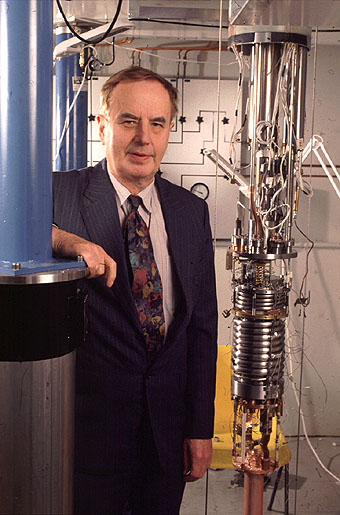
That's not me in the pic, btw. It's a scientific kind of fella from a cool archive page at a Finnish site with a bunch of interesting pics and charts (interesting if you're into science and such, that is).
19
posted on
03/09/2006 9:39:13 PM PST
by
NormsRevenge
(Semper Fi ... Monthly Donor spoken Here. Go to ... https://secure.freerepublic.com/donate/)
20
posted on
03/09/2006 9:39:42 PM PST
by
NormsRevenge
(Semper Fi ... Monthly Donor spoken Here. Go to ... https://secure.freerepublic.com/donate/)
Navigation: use the links below to view more comments.
first 1-20, 21-40, 41-45 next last
Disclaimer:
Opinions posted on Free Republic are those of the individual
posters and do not necessarily represent the opinion of Free Republic or its
management. All materials posted herein are protected by copyright law and the
exemption for fair use of copyrighted works.
FreeRepublic.com is powered by software copyright 2000-2008 John Robinson