
Posted on 02/07/2013 11:13:13 AM PST by jazusamo
A short circuit inside one cell started the 787 battery fire, and assumptions used to certify the battery system proved wrong, the NTSB said Thursday.
The National Transportation Safety Board (NTSB) has pinpointed the start of the 787 Dreamliner battery fire on a parked Japan Airlines jet a month ago today as a short circuit inside a single cell.
The agency still hasn’t identified the cause of the initial short circuit but has narrowed down the suspects.
Details provided by the NTSB make clear that Boeing will have to redesign the battery for a long-term fix.
In addition, the NTSB pointed to failures in the airplane certification process conducted by Boeing and the Federal Aviation Administration (FAA), which failed to identify the hazards revealed by this incident.
“The assumptions used to certify the battery must be reconsidered,” said NTSB chief Deborah Hersman in a detailed press briefing. “Our task now is to see if appropriate layers of defense and checks were built into the design, certification and manufacturing process.”
The overheating that started in cell 6 of the eight-cell battery spread to all the others and caused the fire, Hersman said.
(Excerpt) Read more at seattletimes.com ...
We use similar batteries where I work. They go on charging runaway about once a week. First the smell begins. Then the heavy sulphur smell feels heavy in your lungs. Then the smoke begins. At that point I throw the disconnect from about a hundred yards away and wait until the stink clears. Then I call the battery company who comes out and replaces the unit for about $23,000 dollars. It’s a good business to be in. That is until someone decided to get them approved for an airworthiness application / use! Vehicles on the ground have a use profile of maybe two hours a day. Aircraft run 24/7 until a maintenance cycle.
Good points, I’m amazed they were approved for airliners.
Not only are vehicles used less but if an incident occurs you can stop and get out but that’s kinda difficult at an altitude of 35,000 ft.
http://asq.org/qualitynews/qnt/execute/displaySetup?newsID=15287
Attention is now being focused on the circuitry controlling battery current flow. Don't know who designed those components.
http://asq.org/qualitynews/qnt/execute/displaySetup?newsID=15287
Attention is now being focused on the circuitry controlling battery current flow. Don't know who designed those components.
Have you considered lead-acid or nickel-iron replacements?
Over 20 years ago we used lithium batteries in offshore submersible seismic equipment. They blew up all the time. Luckily it was usually at night sitting on the rack instead of while someone was handling the equipment.
Being smart or correct is not a valuable commodity in a plant. Being safe and approachable seems to be what they want. I just keep stuff running electrically.
*sigh* ain’t that the truth.
(s) a process engineer...
PS I hope no one is killed or permanently injured in the inevitable major fire.
Different materials can be used in these batteries, some safer than others. Based on information posted on its website, Boeing supplier GS Yuasa appears to be using lithium cobalt oxide cathode material, which is the original material used by Sony.
“From a safety point of view, that’s not the best,” said Ji-Guang Zhang, a researcher at the Pacific Northwest National Laboratory in Richland. He said cobalt oxide batteries ignite at lower temperature than lithium batteries made with other materials, such as iron phosphate.
Supplier GS Yuasa declined to discuss whether the batteries in question use cobalt oxide and referred questions to its partner Thales Group, which didn’t promptly respond.
Sorry for the double post. Slow link today.
Anyone knows why the need two huge (for aircraft) battery packs? Seems to me once the APU is started you don’t need that much juice. Same, same for the engines. They each have dual generators.
Not much technical info on the Boeing site.
Maybe it's extra redundancy for all the electronics. Even small aircraft with glass cockpits have dual alternators and batteries.
The control surfaces are electrically operated. What do you do if the fuel is contaminated or gone, and the APU won't start?
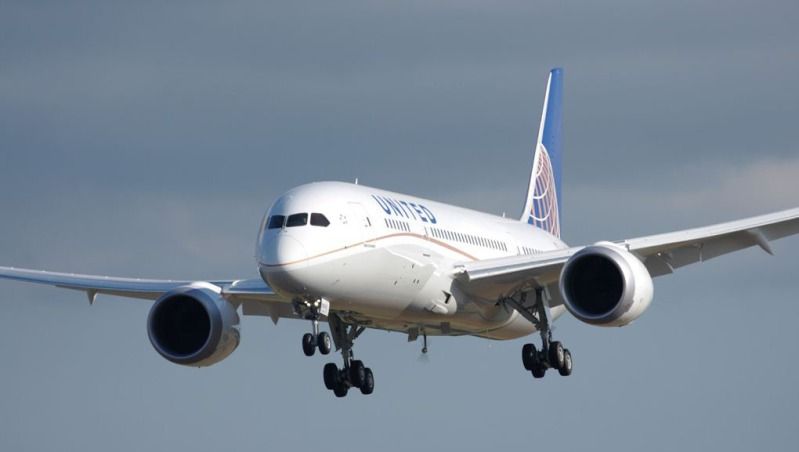
Well, DUH!
Even my R/C Helo instruction manual has a 2 page warning about the lithium batteries must be watched at all times during charging because they are prone to fires.
The FAA really doesn’t do much in thir certifications. They read practically no documents, test nothing, and take the word of whomever provides the docs that the docs accurately reflect the actual system.

Charred to a crisp: The burnt out remains of the lithium battery from a Boeing 787 which investigators are examining in Japan.

Grounded: The fire on board an All Nippon Airways flight forced the plane to make an emergency landing last month.

Damage: A ground wire which was attached to the burnt battery is showed charred, frayed and broken.
Disclaimer: Opinions posted on Free Republic are those of the individual posters and do not necessarily represent the opinion of Free Republic or its management. All materials posted herein are protected by copyright law and the exemption for fair use of copyrighted works.