Posted on 02/21/2007 9:44:31 AM PST by Salvation
LENTEN STATIONS
|
Stational churches are the churches that are appointed for special morning and evening services during Lent, Easter and some other important days. The tradition started in order to strengthen the sense of community within the Church in Rome, as this system meant that the Holy Father would visit each part of the city and celebrate Mass with the congregation.
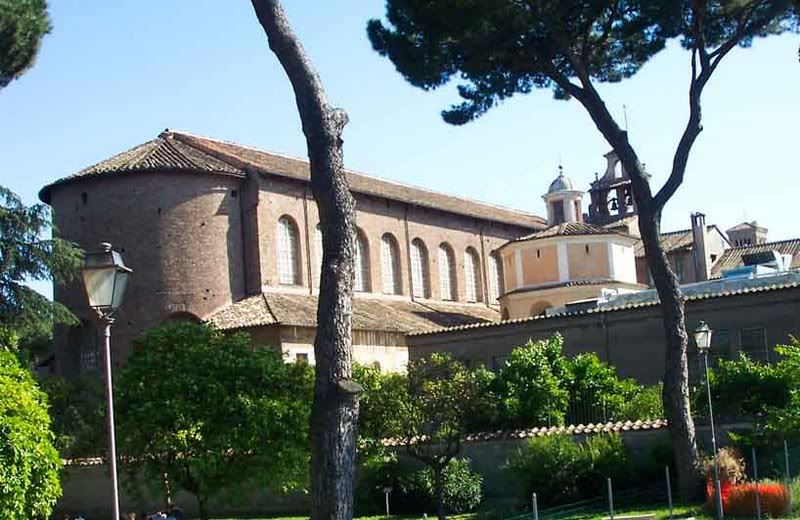
The first stational church during Lent is St. Sabina at the Aventine. It was built in the 5th century, presumably at the site of the original Titulus Sabinae, a church in the home of Sabina who had been martyred c. 114. The tituli were the first parish churches in Rome. St Dominic lived in the adjacent monastery for a period soon before his death in 1221. Among other residents of the monastery were St Thomas Aquinas. Visit Churches of Rome and "Station Churches", a Lenten Journey by Fr. Bill for more information about stational churches. |
|
Day I - Ash Wednesday From as early as the third century, the Church of Rome observed the season of Lent by journey each day to a "Station Church" or one of the ancient and prominent churches of Rome. Here the Bishop of Rome, the Holy Father, would lead the people in prayer. It is a symbol of unity as well as a pilgrimage of faith. Unfortunately, the custom ceased during the Avignon papacy in 1305 but interest was revived by Saint Leo XIII at the turn of the 20th century. Blessed John XXIII fully was restored the custom in 1959. Today, from the earliest times, the Mass is celebrated in the Santa Sabina, "The gem of the Aventine" and home of the Dominicans. Tradition holds that Santa Sabina was a widow who was converted to Christianity by her servant. She was martyred during the persecutions by Hadrian (117-138). The Basilica was built over a house which was thought to be owned by Santa Sabina between 422-432. From the apse mosaic, we know that Celestine I was serving as Pope. At 5:00 in the evening on Ash Wednesday, the Holy Father will come here to participate at an Ecumenical penance service where he will receive ashes. |
||
![]() |
![]() |
|
|
|
In older missals, each day in Lent and other feasts refer to a "Station" in some church of Rome. Although this practice is not highlighted in our present missals, the Church still honors this tradition of Stational Churches, particularly during the Lenten season (see the Vatican website for the list of the stational churches for Lent).
On the day of the station, the faithful would gather in one church (church of the collecta or gathering) and in procession singing the Litany of the Saints or psalms, they would go to the church where the Mass was to be celebrated: there they met the Pope and his clergy, coming in state from his Patriarchal Palace of the Lateran. This was called "making the station." Such a Mass was a "conventual mass" (or community Mass) of the City and the world, Urbis et Orbis (the visible congregation in Rome and the invisible audience of the entire world). This old custom reminds us that Rome is the center of Christian worship, from which we received our faith and our liturgy.
Present Practice of the Stational Church
There is not always a Papal Mass in the stational church, but the stational procession and Mass have been restored at Rome, especially in Lent when each day has its proper Station and Mass. On Ash Wednesday the station at Santa Sabina Church is the most important of all, because the Pope still gathers there and distributes ashes to the people. In the 1968 Enchiridion of Indulgences states "[a] partial indulgence is granted to the faithful, who on the day indicated in the Roman Missal devoutly visit the Stational Church of Rome (Stationalium Ecclesiarum Urbis visitatio) named for that day; but if they also assist at the sacred functions celebrated in the morning or evening, a plenary indulgence is granted."
There are 86 stations of the year (great feasts and during Lent), and on Christmas, three, and on Easter, two "stational Masses" are mentioned, bringing the number of these stations to 89. Most of the stations are named after saints. In gathering for the Mass, the saint was so vividly in the minds of the people, that the saint seemed present among them. This explains why the missal states "Statio ad sanctum Paulum." The service is, as Pius Parsch states: "not merely in the church of St. Paul, but rather in his very presence. In the stational liturgy, then, St. Paul was considered as actually present and acting in his capacity as head and pattern for the liturgical worshipers. Yes, even more, the assembled congregation entered into a mystical union with the saint by sharing in his glory and by seeing him beforehand the Lord's advent in the Mass."
The processing from church to church demonstrates our earthly pilgrimage to our eternal home. This universal Christian practice also reminds of our Roman heritage, and helps us pray as one body, encouraging and praying for one another, worshipping together as a universal community. Let us use this old custom for "interior transformation and transmutation through the Lenten Eucharist under the leadership of our stational saint in holy fellowship." (M. Hellriegel).
Jennifer Gregory Miller Jennifer G. Miller
Activity Source: Original Text (JGM) by Jennifer Gregory Miller, © Copyright 2003, 2004, 2005 by Jennifer Gregory Miller
Please notify me via FReepmail if you would like to be added to or taken off the Catholic Discussion Ping List.
ping to read later
Let us know if you have visited any of these churches in person!
great post, Salvation. Thank you.
I can't seem to find an English translation for the original post, sorry.
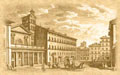
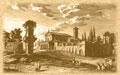
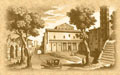
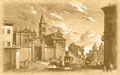
yeah, but the sketches are cool
Salvation didn't know.
Garde la Foi, mes amis! Nous nous sommes les sauveurs de la République! Maintenant et Toujours!
(Keep the Faith, my friends! We are the saviors of the Republic! Now and Forever!)
LonePalm, le Républicain du verre cassé (The Broken Glass Republican)
I think because it is actually the cathedral church of Rome.
WooHoo! Thanks Salvation.
~from Cantius.org
Remember man that thou art dust, and into dust thou shalt return.
If there is any place in Rome where Lent, with its atmosphere of penitential solitude mixes with the reawakening of spring, then it must be along this path which climbs up from the Circus Maximus towards the Aventine, on the top of which stands the Church of St. Sabina.
In God's name then let us go up to the holy mount. Is it not significant that the first Lenten mystery is celebrated on a mount, the Aventine? Already in pre-Christian days this hill was an asylum for refugees, a post of security. To St. Sabinaa martyr, converted to the faith by the prayers, fasts and example of her Christian servantwe entrust ourselves today. To her we have recourse in our sinfulness. She will present her martyrdom and her prayers to God on our behalf and obtain His blessing upon our Christian warfare, so that "we may be converted to God with our whole heart, in fasting and in weeping and in mourning, and rend our hearts and not our garments, and turn to the Lord, our God."
Let us pray: Grant, O Lord, to Thy faithful people that they may begin the venerable solemnities of fasting with becoming piety, and may persevere to the end with steadfast devotion. Through Christ, Our Lord. Amen.
Cool!
Lovely photo, thanx for posting.
Thanks, have a blessed Lent.
Yes, they are.
You're welcome. May the Season of Lent provide you with stepping stones to holiness.
**Let us pray: Grant, O Lord, to Thy faithful people that they may begin the venerable solemnities of fasting with becoming piety, and may persevere to the end with steadfast devotion. Through Christ, Our Lord. Amen.**
Thanks for coming to the thread.
I thought it was a great idea too. Each day we will add the Stational Church of that day.
Have a fruitful Lent.
I enjoyed the online visit to the first church "station" in la bella Roma.
Great post, great idea! Thanks.
Today's station is at St. George's. Pope St. Gregory established a diaconia, an institution that cared for the poor, at the site of this church. The area has a special place in the history of Rome, as an ancient tradition claims that it was here that Romulus killed his brother Remus before founding the city.
|
Day II. Thursday after Ash Wednesday. "May everything we do begin with your inspiration, continue with your help, and reach perfection under your guidance" (Collect for today). |
||
![]() |
THURSDAY AFTER ASH WEDNESDAY
StationSt. George
Just a short distance from St. Sabina stands our second stational church, St. George in Velabro. The church dates back to the year 500, but was reconstructed under Leo II (682-683). This church is one of the original 25 diaconal seats of the Roman church. The head of this warrior Saint is preserved under the high altar.
The purpose of Holy Lent is to bring about a spiritual renovation. This work of renovation is accomplished by both God and man; by God, principally through the holy Eucharist; by man, mainly by fasting, prayer, and almsgiving.
May our stational patron, St. George, helps us to overcome the dragon of inertia in our prayer life and to cast again with new fervor our cares upon the Lord.
Let us pray: O God, who by sin art offended and by penance appeased, mercifully regard the prayers of Thy suppliant people, and turn away the scourges of Thy wrath, which we deserve for our sins. Through Christ, Our Lord.
Amen.

The station for today is on Mt. Coelius in the basilica which the Christian Senator Pammachius built over the home of the martyrs Sts. John and Paul and which is dedicated to them. Near the church was a hospice where Pammachius dispensed his fortune in charity to the poor.
|
Day III. Friday after Ash Wednesday Lord, through this Lenten Eucharist may we grow in your love and service and become an acceptable sacrifice to you. We ask this through Christ our Lord" (Prayer Over Gifts for today). |
||
![]() |
|
Santi Giovanni e Paolo has the Passionist monastery next to it. St. Paul of the Cross is buried there. Several Popes used to make their annual retreats at the monastery. Also, this basilica has had American cardinals serve as titulars, currently held by Cardinal Egan.
It is a gorgeous basilica inside. The monastery gardens are very peaceful to stroll around.
Today, Pope Benedict announced the canonization of one of the Passionists. So it's a special day for that order.
FRIDAY AFTER ASH WEDNESDAY
StationSts. John and Paul
The third Lenten Station takes us up to a high hill of ancient Romethe Celian Hill, which stands in front of the Palatine and which dominates the valley of the Circus Maximus. The church was built upon the house where Saints John and Paul were martyred and buried. Martyred in the year 361, by Julian the Apostate, they were two imperial officers in Constantine's court.
We celebrate the divine mysteries today in the light of the "two candelabras shining before the Lord," as the Church calls the two brothers John and Paul. There can be no fruitful lent without practical charity. Practical charity means that we must come to our brother's rescue sincerely, unselfishly and supernaturally.
As children of the God of charity, let us so approach today's Eucharist that it may enkindle in us the spirit of true Christian charity, and thus to "be perfect, as our heavenly Father is perfect."
Let us pray: Regard with Thy loving care, we beseech Thee, O Lord, the fast which we have begun; that the abstinence, which we keep with our body may be exercised with sincerity of mind. We ask this Through Christ, Our Lord.
Amen.
Io non parlo molto italiano ma e interesante in tutti casi. (Hope I got that right.)
It sounds like you have been to Rome. Oh, I would love to make that trip! But I understand that with any tour there is a lot of walking in Rome.

The station for today is at the church dedicated to St. Augustine of Hippo. Michalangelo was one of the artists commissioned for the decoration of the church. The Renaissance façade, one of the first in this style, is built of travertine marble said to be from the ruins of the Colosseum.
|
|
Day IV. Saturday after Ash Wednesday "Teach me your way, O Lord, that I may be faithful in your sight" |
Remember that if you click on the Vatican site (first post) you can read about the Stational Church of the Day -- but it's in Latin!

The ceiling and dome at Sant'Agostino. The blues and golds are much more vivid in person than in this picture. Sant'Agostino is one of my favorite churches in Rome partly because of my affinity for St. Augustine and for his saintly mother who is buried there. The Caravaggio Madonna of the Pilgrims and Raphael's Isaiah are there. Here's the high altar designed by Bernini:
Thank you for these wonderful photos. Truly gorgeous.
SATURDAY AFTER ASH WEDNESDAY
StationSt. Augustine/St. Tryphon
Pope Pasquale II (1099-1118) laid the relics of St. Tryphon to rest under the present church of St. Augustine.
Health of body and, above all, health of soul are precious gifts from Godgifts for which we must be grateful. The Church is particularly concerned about the health of our soul, the well being in us of the life of Christ. She knows our spiritual shortsightedness, she knows, the unsteadiness of our will, she knows the power of our passions, all of theminfirmities caused by Original Sin, as well as by our personal sins. She sees her children make resolutions and break them. She knows how often the fuller unfolding of the sacramental life is impeded because her sons and daughters are lacking in purity of intention and proper appreciation of God's gifts.
For that very reason she instituted this holy season as a time of great healing. Lent is God's hospital. Serious operations are to be performed during this time. And blessed are they who gladly submit to them. Vitia comprimis, mentem elevasvices are to be curbed, spiritual cancers to be removed, the mind is to be renewed, elevated, so that, after our stay in His hospital, the same mind may be in us, which is also in Christ Jesus.
We humbly implore our dual Saints to guide us to the Divine Physician, the Healer of our soul and body.
Let us pray: Be mindful, O Lord, of our supplications, and grant that we may keep with devout service this solemn fast, which thou has wholesomely ordained for the healing of our souls and bodies. Through Christ, Our Lord.
Amen.

The Station today is at St. John Lateran. The Lateran is comprised of the Basilica, the Pontifical Palace and the Baptistry. The church is dedicated to the Christ the Savior. In the fifth century the titles of St. John Baptist and St. John the Evangelist were added. The Papal altar contains the wooden altar on which St. Peter is said to have celebrated Mass. This basilica is the mother of all churches and is the only church which has the title of Archbasilica.
|
|
Day IV. Saturday after Ash Wednesday
Day 4 Photo: The tomb of Saint Monica - a model of |
|
|
|
|
|
|
|||
|
continued......
There is also a statue by Sansovino of the Madonna of Birth where all of the Roman women come and pray for safe deliveries (1516). But the highlight is the tomb of Saint Monica - a model of faithful perseverance in prayer (332-387). Through her intercession, her wayward son, Augustine, converted and became a Doctor of the Church. There I offered a prayer for my mother, in thanksgiving for her prayers, and for all mothers.
(Photo: Our Lord with his mother and |
|
Day V. Sunday, Week I. "Man does not live on bread alone, but on every word that comes from the mouth of God" (Communion Antiphon for today - Mt 4:4) |
||
![]() |
|
FIRST SUNDAY OF LENT
StationOur Most Holy Savior in the Lateran
The Cathedral Basilica of Romecaput et mater omnium ecclesiarum Urbis et Orbistriumphantly celebrates the first solemn day of Lent.
Today, the faithful pilgrim in spirit to the Lateran Basilica of the Most Holy Savior, "head and mother of all the churches of the City and the World," the cathedral of the Bishop of Rome. In this basilica Lent officially begins, in this church also, it is concluded.
The acceptable time is at hand. "We exhort that you receive not the grace of God in vain." "It is true," says St. Leo, "there is no season, which is not rich with God' gifts. His grace does ever give us an entry to His mercy, yet at this time the minds of all should be urged with greater earnestness towards spiritual progress, and should be animated by a trust in God stronger than ever, for now the anniversary of that day on which we were redeemed is drawing near. Therefore, let us be moved to perform every work of godliness, to the end that we may be able to celebrate, with clean minds and bodies, that mystery, which excels all othersthe mystery of the Lord's passion." (Matins, Second Nocturne)
This holy fast (Quadragesima) will open unto us the gates of Paradise. We must embrace it with prayer and supplication, so that we may rejoice with the Lord on the day of Resurrection.
Let us pray: O God, who does purify Thy Church by the yearly observance of forty days; grant to Thy household that what we strive to obtain from Thee by self-denial, we may secure by good works. Through Christ, Our Lord.
Amen.

The Station today is at St. Peter in Chains. The church was one of the tituli, Rome's first parish churches, known as the Titulus Eudoxiae or the Eudoxiana. It was built over the ruins of an Imperial villa in 442 (or possibly 439), to house the chains that had bound St. Peter in prison in Jerusalem.
|
Day VI. Monday, Week I. "Lord, may this offering of our love be acceptable to you. Let it transform our lives and bring us your mercy. We ask this through Christ our Lord" (Pray over the Gifts for today). |
|
![]() |
MONDAY IN THE FIRST WEEK OF LENT
StationSt. Peter in Chains
From the heart of the Roman Forum, the penitential procession climbed up the road winding up towards the Esquiline Hill and came to the church of St. Peter in Chains, also called the "Eudossian Basilica" (as it had been built in the place of another church by Eurdossia, wife of the emperor Valentinian III, to preserve in it the chains of St. Peter).
The Station of this day is at St. Peter in Chains and the Church takes us today to the divinely appointed watchman of "the lambs and sheep of Christ"St. Peter.
The Chains, which held the shepherd of the lambs and sheep consist of forty-four links. Forty-four days separate us from Holy Thursday, the beginning of the Paschal solemnities when our "Lenten" work must be an accomplished fact.
How many links has that chain from which Christ, our good Shepherd, desires to free us in this acceptable time? We are fully aware that during this season of salvation this chain must be broken and the links thrown outthe big ones in particular. Which are your principal faults? Are you working against them?
Let us pray: Convert us, O God our salvation, that the Lenten fast may be of profit to us. Instruct our minds with heavenly discipline. Through Christ, Our Lord.
Amen.

At Rome, the Station is in the church of St. Anastasia, where, formerly, the Mass of the Aurora on Christmas Day was celebrated. The first church was built in the late 3rd or early 4th century, and was one of the first parish churches of ancient Rome. It was given by a woman called Anastasia and called titulus Anastasiae after her. Later, it was dedicated to a martyr of the same name.
|
Day VII. Tuesday, Week I. "Forgive us the wrong we have done as we forgive those who wrong us" (Gospel for today - Mt 6:12).
|
||
![]() |
|
TUESDAY IN THE FIRST WEEK OF LENT
StationSt. Anastasia
Linked to this church is the tradition of the "first-light" MassMass at dawnwhich is celebrated in the first hours of the Christmas morning.
We keep this day in company with the widow-martyr, whose heavenly birthday the Church observes on the very birthday of the Light of the world. In the Christmas Mass "at dawn" St. Anastasia, whose name means "dawn"the new lightis commemorated. In that "aurora Mass" and again today, the words fulgebit, fulgeat"shine, radiateoccur.
A holy "radiating" is the fruit of a holy Lent. Everyone is called to be an "Anastasia", a new light, replenished by the light of ChristLumen Christi.
Let us pray: Look down upon Thy household, Lord, and grant that our souls, chastened by the mortification of the flesh, may radiate in Thy sight with the desire for Thee. Through Christ, Our Lord.
Amen.

Today's Station is at St. Mary Major. The spring Ember Week consecrated the new season to God and by prayer and fasting sought to obtain abundant graces for those who on Saturday were to receive Holy Orders. The Station was fittingly held in the church, which witnessed the first scrutinies for the coming ordinations, and which was dedicated to the mother of the great High Priest.
Disclaimer: Opinions posted on Free Republic are those of the individual posters and do not necessarily represent the opinion of Free Republic or its management. All materials posted herein are protected by copyright law and the exemption for fair use of copyrighted works.